Ask anyone who actually runs a warehouse and they'll tell you the same thing: the job is nothing like it looks on paper. On paper, products arrive, get stored, get picked, and ship out. In real life, you're chasing down a pallet that was put in the wrong bin, explaining to a customer why their in-stock order isn't, and trying to figure out why your best picker just quit two weeks before Black Friday.
We've been in fulfillment for a long time at ShipwithMina, and we've watched the same warehouse management challenges trip up business after business. The good news? Most of them have been solved before. You don't need to reinvent anything. You just need to know what you're dealing with. So here are the warehouse challenges we see most often, and what's actually worked to fix them.
1. Your Inventory Numbers Are Lying to You
If we had to pick the single most damaging of all the common warehouse management challenges, this is it. Bad inventory data poisons everything downstream.
Here's how it usually goes. Someone receives a shipment and keys in 100 units instead of 10. A picker grabs an item for a rush order and never scans it. A return comes back and sits in a corner for a week before anyone logs it. None of these are big mistakes on their own, but they pile up until your system says one thing and your shelves say another.
Then the fun starts. You oversell a product and have to email customers with the bad news. Or the opposite happens. Your records show you're running low, so you reorder, and a month later you're staring at a wall of overstock you didn't need. Both hurt. One costs you customers, the other ties up cash and eats warehouse space.
What actually fixes it:
- Scan everything. Barcodes or RFID, doesn't matter which. What matters is that nothing moves without being recorded. Manual data entry is where inventory accuracy goes to die.
- Ditch the annual count. Cycle counting, meaning you count a small slice of your inventory every week on rotation, catches discrepancies while they're small and doesn't shut down your warehouse operation for two days.
- Get your systems talking. Your WMS should sync with your sales channels in real time. If someone buys the last unit on your website, your other channels should know within seconds, not after a nightly export.
2. A Warehouse Layout That Fights You Every Day
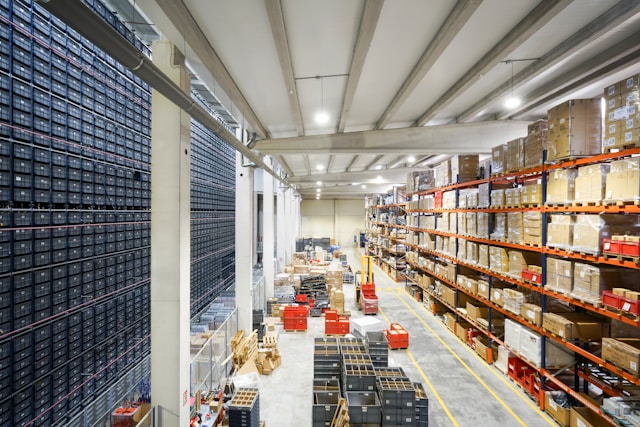
Bad warehouse space utilization is sneaky. Nobody notices it as a problem. It just quietly makes everything take longer than it should. Pickers walking an extra thirty feet per order. Two fast-selling SKUs stored at opposite ends of the building. Your top seller buried on the top rack because that's where it fit when it first came in.
A few red flags your layout needs work:
- Pickers spend more time walking than picking (this is shockingly common)
- Certain aisles turn into traffic jams every afternoon
- Seasonal inventory sits in prime real estate all year
- The floor is packed but half your vertical warehouse space is empty air
The fix starts with an ABC analysis. Rank every product by how often it ships. Your A items, the stuff that flies off the shelves, belong within a few steps of your packing stations. Slow movers can live in the back or up high. We've seen this single change cut picking time by 20% or more, with no new hires or equipment required.

Beyond that, revisit your layout once a year at minimum. Your product mix shifts, order volume grows, and the layout that worked two years ago might be costing you hours every single day now. And look up. Taller racking or a mezzanine can add serious capacity without the cost of a bigger building. Warehouse space utilization is one of those things that pays for itself fast.
3. Labor Shortages and the Turnover Treadmill
Talk to ten warehouse managers and nine of them will put warehouse labor somewhere near the top of their headache list. Hiring is hard, retention is harder, and the physical nature of the work means there's always someone out with a strained back or a better offer.
The part people underestimate is what turnover actually costs. Every experienced worker who walks out takes their speed and accuracy with them. The replacement needs weeks of training, picks slower, and makes more mistakes while they learn. If your warehouse staff is constantly churning, a huge chunk of your payroll is going toward training people who'll be gone in six months. That's not a staffing problem. It's a profitability problem.
What helps:
- Make the work easier to learn. If a task takes two weeks to train, that's a process problem, not a people problem. Clear bin labels, sensible pick paths, and decent management software can cut ramp-up time dramatically.
- Treat workforce management like it matters. Pay is table stakes. Schedules that people can plan their lives around, a safe floor, and managers who notice good work: that's what keeps people around. Labor management systems can also help you schedule against forecast demand instead of guessing.
- Automate the soul-crushing stuff. Nobody's dream job is walking ten miles a day with a clipboard. Conveyors, mobile scanners, pick-to-light: warehouse automation that removes the most repetitive work doesn't just improve labor efficiency, it makes the jobs you do offer more tolerable.
4. Picking and Packing That Eats Your Margins
Picking is typically the single most expensive activity in a warehouse, often more than half of total labor cost. So when picking is inefficient, you're bleeding money on every order.
The classic culprit is single-order picking: one worker, one order, walking the whole warehouse from start to finish. If your average order has four items spread across the building, your picker is basically a very expensive hiker.
Picking methods worth knowing:
- Batch picking: grab the same SKU for ten orders in one trip instead of ten trips.
- Zone picking: each picker owns a section and orders move between zones, like an assembly line.
- Wave picking: release groups of orders on a schedule, usually timed around carrier pickups.
Which one's right depends on your volume and product mix. A shop doing 50 orders a day doesn't need what a 5,000-order operation needs. But whatever you choose, measure picks per hour before and after. Guessing doesn't count. And if your order management workflow has packers standing around waiting for totes, that's a bottleneck worth chasing down. A modern WMS can optimize pick paths and balance the load so one station isn't drowning while another idles.
5. Returns: The Warehouse Challenge Nobody Plans For
Returns management is the part of the warehouse everyone treats like a junk drawer. Items come back, get dumped in a corner, and sit there until someone has time. Meanwhile that time never comes, and the pile grows.
Here's why that's expensive. Until a return is inspected and logged, that inventory is invisible. Your system thinks you're out of stock, so you reorder, while perfectly sellable units are sitting ten feet away in a cardboard box. Refunds take forever, which means angry emails and customers who never come back. With e-commerce return rates often hitting 20% or more, ignoring reverse logistics is one of the costliest mistakes in warehouse management.
The fix isn't complicated, it just requires commitment: a defined process (receive, inspect, grade, restock or dispose), a deadline (48 hours is a good target), and a WMS that puts graded items back into available stock levels immediately. Do that, and returns stop being a disruption and start being a recovery channel. Bonus: fast refunds are one of the cheapest loyalty programs you'll ever run.
6. Flying Blind Without Real-Time Visibility
Can you answer these right now without leaving your desk? How many units of your top SKU are actually on the shelf? Where's the order that customer just called about? Did this morning's shipment make the truck?
If not, you're making decisions in the dark. And decisions made in the dark tend to be expensive. You don't see the backlog building until shipments are already late. You don't catch the receiving error until a picker finds an empty bin with forty orders waiting on it. Stockouts surprise you. Overstock surprises you. Everything surprises you.
A proper warehouse management system changes this completely. Live dashboards showing inventory, open orders, order accuracy, on-time shipping rates. Suddenly you're running the operation on data instead of gut feel and walkie-talkie checks. Most WMS solutions also plug into order management and distribution management tools, so you get visibility across the whole supply chain, not just your four walls.
Honest caveat: implementing a WMS properly takes real money and real effort. If that lift is too big right now, this is genuinely one of the strongest arguments for a fulfillment partner. At ShipwithMina, for example, our clients get that real-time tracking and reporting from day one, without buying or maintaining the software themselves.
7. Peak Season Hits and Everything Breaks
Every year, warehouses that hum along fine from February to October fall apart in November. Seasonal demand is predictable in theory and brutal in practice.
The failure pattern is always similar: temp workers with two days of training making errors at three times the normal rate, packing stations backing up because picking can't feed them fast enough, carrier pickups getting missed, and a customer service inbox full of order status complaints.
Peak prep is mostly a calendar problem, which means it's solvable:
- Forecast early. Pull last year's data two to three months out and plan inventory and staffing around it. Yes, forecasts are wrong sometimes. A wrong forecast still beats no forecast.
- Pre-position inventory. Move your likely best sellers near packing before the rush, not during it.
- Train temps before the wave. An extra week of training in October saves a month of errors in December.
- Lock in carrier capacity early. Everyone's fighting for the same trucks. The businesses that confirm volume in September get priority over the ones calling in a panic mid-December.
- Spread your inventory. Stocking in more than one location shortens delivery times and means one overwhelmed facility can't sink your whole season.
Building a warehouse operation that's truly scalable, one that flexes up for peaks without your cost structure exploding, is probably the hardest challenge on this list. It's also where outsourcing tends to make the most sense, because a good 3PL company absorbs that variability across dozens of clients instead of you absorbing it alone.

So... Build or Outsource?
At some point, most growing businesses hit the fork: keep investing in your own warehouse, or hand fulfillment to someone else. Neither answer is universally right, but here's when we'd argue outsourcing deserves a hard look:
- Warehouse work is eating time that should go to product and marketing
- You're out of space and staring down a bigger lease
- You ship from one location and your delivery times (and shipping bills) show it
- Every peak season means another hiring-and-training scramble
- A WMS, warehouse automation, and proper management systems are investments you can't justify yet
A solid fulfillment partner handles receiving, storage, picking, packing, shipping, and returns management, with professional systems and negotiated carrier rates you'd struggle to match on your own. It's not free, obviously. But neither is doing it badly yourself.
Wrapping Up
Here's the thing about warehouse management challenges: they travel in packs. Sloppy inventory data causes picking errors. A bad layout burns out your team. Burned-out workers quit, which makes everything worse. But the reverse is also true. Fix your inventory accuracy and order errors drop. Fix your layout and productivity climbs. Fix one thing well and the next fix gets easier.
Our advice: pick three or four numbers and start tracking them this week. Order accuracy, picks per hour, inventory accuracy, on-time shipping. Find your worst number. That's your bottleneck, and that's where you start.
And if you get through this list and realize managing a warehouse isn't where your energy belongs, well, that's literally what we do at ShipwithMina. We'll run the warehouse. You run the business.
FAQs
1. What's the biggest challenge in warehouse management?
Inventory inaccuracy, and it's not close. It causes overselling, stockouts, overstock, and unhappy customers all at once. Most other warehouse management problems get dramatically easier once your inventory data is trustworthy and updating in real time.
2. How do I improve warehouse picking efficiency?
Run an ABC analysis first. Your fastest movers belong near packing. Then match a picking method to your volume (batch or zone picking for most mid-size operations). A WMS that optimizes pick routes helps a lot. Whatever you change, measure picks per hour before and after so you know if it actually worked.
3. What does a warehouse management system (WMS) actually do?
It's the software backbone of the warehouse. It tracks receiving, inventory, picking, packing, and shipping in one place, syncs stock levels with your sales channels in real time, and gives you the reporting to make decisions based on data instead of hunches.
4. How often should I count inventory?
Stop doing one giant annual count. Cycle counting, where you count a small section every week on rotation, keeps inventory accuracy high all year without shutting anything down. Count your high-value and fast-moving SKUs more often than the slow stuff.
5. Can warehouse automation really help with labor shortages?
Yes, but not by replacing everyone. Automation shines on the repetitive tasks like conveying, sorting, and scanning, which means you need fewer people, new hires get productive faster, and the jobs that remain are less punishing. Even modest tools like mobile scanners and pick-to-light systems move the needle on labor efficiency.
6. When should a business outsource fulfillment?
When warehouse costs keep climbing, you're out of space, or running the operation is stealing focus from growing the business. If you miss shipping deadlines every peak season, or the technology you need is out of budget, a fulfillment partner can usually do the job better and cheaper than your in-house setup, and it frees you up entirely.